Abstract:
During this article, I will use Greimas’ semiotic theory of veridiction to produce an analysis of gender identity within queer subculture as viewed through the lens of the heterosexual matrix. Visual analysis of queer individuals’ presentation of self/gender-expression, with insight into queer and gender studies will allow me to further conversations circulating around a contemporary matter, which tends to focus solely on the binary nature of gender today while also failing to recognise the complexity of ‘being’ compared to ‘appearing’, especially in terms of gender identity, created by linguistic shortfalls and society’s misunderstanding. A critical discussion will take place as to the way that Queer subculture interacts and communicates with heterosexual receivers with particular focus on gender expression and identity, involving the intent of communication and the ability to subvert current societal norm, such as Butler’s concept of the heterosexual matrix. Stepping away from the binary viewpoint of the intersection between queer and gender studies, developing a multi perspective take regarding the heterosexual receiver and the queer senders, from this analysis a model will be presented with view to open a realm of further discussion about subversion and conformity of the gender binary in contemporary queer subculture.
Keywords:
Semiotics – queer subculture – gender theory – sexuality – veridiction – gender expression – gender identity
- Introduction
Queer is a multifaceted term in current western culture, due to societal constructs that rely on such a term to constitute the idea of ‘otherness’ without a specific identity (Jagose 1996). This sense of ‘otherness’ is a value that can be expressed by a deviance from a prescribed norm. Queer Subculture, the arena for not only homosexual people but also individuals who deviate from societal norms of gender and sexuality, from camp dress (Sontag 1964) to the trans community (Papoulias 2006), has a gained knowledge of the weight that not only appearance but also linguistics have on communicating chosen identities, that are created in part by the individual, ‘‘The discursive proliferation of queer has been enabled in part by the knowledge that identities are fictitious–that is, produced by and productive of material effects but nevertheless arbitrary, contingent and ideologically motivated’’ (Jagose 1996:NP). Queer subcultures have a hyper awareness of what Greimas (1989) named ‘told truths’ seen in social exchanges such as asking an individual’s pronouns, moreover an affinity towards the becoming of a being that is self-created. Linguistics is important to avoid harmful exchanges within queer subcultures, functioning to help navigate constructed identities, albeit extra-linguistics such as appearance are still observed. Often, due to mainstream society, that of a heterosexual matrix (Butler 1990), even as queer people we make reactionary decisions based on a set of schemas involving gender, questioning to what extent gender expressions relates to gender identity in contemporary queer subcultures and, the role the veridiction contract—social contracts between senders of information and receivers via communicated truths—plays in the “constraining effects of naming’’ (Jagose 1996).
To understand these contracts that allow gender expressions to operate to articulate gender identity, normative or otherwise, a foundation of understanding of gender studies must be formed. Gender trouble (Butler 1990) questions the relationship between sex and gender, while clearly detailing that gender is a societal construct that relies on constant performativity from the individual body, linguistically and visually, to communicate and perpetrate a given norm or expectation of gender congruency. This congruency is in relations to not only gender expression and identity but also involving the individual’s sex, though it has no natural tie with gender. There is an expectation that the way a person appears matches the way they identify. This requiring the receiver to accept the gender performativity of the sender for it to hold true, as to be normative is not a natural state and requires work (Ahmed 2006), thus creating a continued social contract between an individual expression gender identity and the receiver of these signs. This ‘‘Presum[ption] the bodies must have a coherence between sex, gender identity and gender expression of; that these categories are stable’’ (Baggio 2019:655, our translation) constitutes the heterosexual matrix (Butler 1990), the limiting factor of ‘culture intelligibility’ bias towards the given norm. The constructed nature of identity being limited to a set of rules, laid out by the receiver of the props the sender tries to use.
The analysis will be supported by Greimas’ theory of the veridiction contract which will be used in the capacity of a social contract that affects the way in which gender is viewed, as gender expression is a form of social exchange. ‘‘Truth is an object of communication and requires fiduciary ratification’’ (Greimas 1989: 659), explains the weight of believability of the information being communicated. This contract explains how plausibility is a reached agreement via adult rationality (Greimas 1989: 651-657), highlighting the effect the contract has on queer gender and how ‘‘Queer bodies hover outside the power structure of society due to their perceived lack of ‘Realness”’ (Sichler 2010:53), further enforcing the ‘‘gap between knowing and believing’’ (Greimas 1989: 659). When we look at the heterosexual receiver communication with the queer sender, a relationship already unstable due to heteronormative power structures, a clear mismatch of given realities starts to be highlighted (Jagose 1996).
Reviewing the nature of drag culture in affiliation with subversion of hegemonic gender, Butler solidifies that there is ‘‘no necessary relation between drag and subversion’’ (Butler 1993:85). The subversion in question is that for dominant gender norms and not that of heterosexuality, disputing heterosexuality’s claim to naturalness, granted to it by hegemonic gender. This starts to question whether forms of gender denaturalization, can achieve the goal they set out to do, ‘’whether parodying the dominant norms is enough to displace them, whether the denaturalization of gender cannot be the very vehicle for reconsolidation of hegemonic norms’’ (Butler 1993:85). Denaturalization of gender is a parody of the current status quo, aiding in refortifying the power structure made by social constructs, ‘‘The queer copies are, thus, perceived as little more than cheap knockoffs of ‘straight’ or properly gendered behaviour’’ (Sichler 2010:46). Moreover, if the non-normative is just a reflection of the norm, then it cannot be subversive of the norm as it occupies this given space (hooks 2006).
A range of images of queer individuals will be visually analysed to help explore gender identity and expression as a construct, how this is signified through gender expression and the effect this has on social agreements constructed between queer senders and heterosexual receivers. Linguistic values will be matched with the visual analysis to articulate the way identity relies on language to claim being rather than just appearing. The identities being discussed will show the way queer subcultures try to subvert the given norm of the gender binary produced through the heterosexual matrix, by operating within the reality constructed aided by the act of imitation and parody, questioning the intent of the queer sender opposed to the understanding of the heterosexual receiver.
2. Gender and social contracts
By communicating your gender as non-binary you assume that the heterosexual receiver can accept that there is no natural link between sex, gender identity and gender expression. In a cis-gendered world the assumed congruency of gender carries a huge weight in the plausibility of communicated gender. Have you ever wondered why, today; forms often say ‘Man – Woman – prefer not to say – Custom’? What does ‘custom gender’ mean, as ‘custom’ looks like a term used to nullify a subversive idea, as though “personalized identities are eventually realigned upon a spectrum, with masculine on one end and feminine on the other’’ (Sichler 2010:46). From a position of lack of power, the queer identity tries to produce a tertiary position. This lack of power comes not only as a result of the heterosexual matrix of today’s society but also the social contracts at play, that between a receiver imbued with heterosexual biased and a queer sender, seeking to communicate an expression that falls outside of the binaries of today’s society.
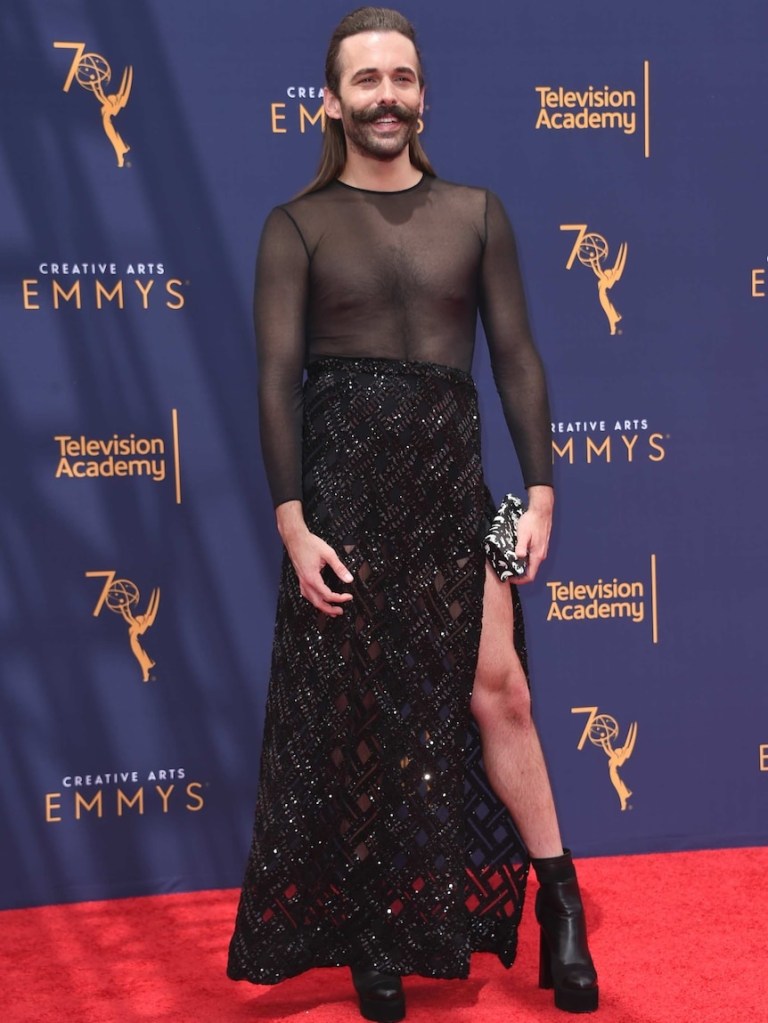
Non-binary celebrity Johnathan Van Ness (Fig. 1) is shown using a range of masculine and feminine gender props at a red-carpet event, contrasting heavy facial hair with a skirt, and sheer fabric with a visible male-presenting chest. They are using both types of gender props as defined by the gender binary to try and create a sense of ‘other’, however the value of this presentation does not truly match the semiotic specification of neutral or [neither-nor]. Here the term non-binary is trying to articulate an identity apart from the ‘standardised’ binary options, a double-denial of the binary, however this expression of identity is not apart from the binary but closer to a union of the binary—a complex term. The gender binary is reconstructed into a spectrum of gender expressions and props from which the individual picks and chooses which they will use to help communicate the message of ‘queer’. The heterosexual receiver ignores their intent and will pervert the way the non-binary individual has used gender props, assess if there are more masculine or feminine props and if these props correlate ‘correctly’ to an assumption the heterosexual will form on the individual sex. This will construct an assumption of ‘normative’ gender that the receiver will label the non-binary sender. The non-binary sender has not been able to access a denial of the given binary due to utilising tools from both ends of the gender binary, masculine and feminine. This contemporary linguistic expression of identity, non-binary, is blocked from accessing its intent due to language’s inability to fully articulate such a complex term, moreover due to a lack of understanding from the sender of how to access expressions that present as truly neither-feminine-nor-masculine.
The power the binary holds is due to the prevailing heterocentric society we live in which places a large focus on gender congruency and binarism (Butler 1990). However, the gender binary and the language that is constructed around it fails to account for the complexity of queer identity and expression. When sexuality and the queer experience is introduced, such as non-binary identities, the binary is forced to bend and twist in a way in which it still encompasses these ideas. The receiver of queer information reinterprets information and reframed it to the heterosexual binary, thus avoiding complexity caused by the queer experience, almost simplifying the world around themselves. As such, conforming is an ideal that queer people are expected to meet; however, if this is not achieved, the gender expression being displayed will still be perverted by the heterosexual receiver into a plausible gender identity, regardless of how the queer individual identifies. Thinking of masculinity and femininity in this way is trying to understand how they work together to produce meaning of identity. As bodies push, instead of breaking the binary, it expands to encompass this new expression. This allows the binary to retain its power, and thus perpetuates heterosexual cis-gendered norms. There is a constant need to reaffirm gender via gender expression, however in that fragility of not being able to support itself, gender is constantly being communicated as a set of norms, causing the ratification of gender as a construct (Butler 1990).
Gender conforming is seen as ‘normal’ due the statistical probability of an individual’s gender expression complimenting their gender, which, when viewed through the heterosexual matrix, is mirrored by their sex (Butler 1990). Queer subculture has a different relationship with gender than that of the heterocentric prevailing culture: an understanding can be reached between queer senders and heterosexual receivers, under the restricted communication of conforming; however, these are naturally unstable forms of veridiction. Conforming to gender perpetuates the need to conform to gender for many individuals. The concept of masculine men and feminine women are viewed as given norms due to an abundance of conforming individuals produced by the power held by the heterosexual matrix.


Looking at Wentworth Miller, an openly homosexual popular actor (Fig. 2), we see a cis-gendered presenting man. The gender props Miller is using are masculine forms of dress such as tailored trousers, a black tie, and a white shirt, furthermore the styling of the actor, short hair and lack of jewellery are expressions of conforming to his gender norms. This is similarly true of Cara Delevingne, a homosexual model (Fig. 3). This image of Delevingne is completely gender conforming using feminine gender props: a pink flowy dress, long styled hair, makeup, and jewellery, to communicate the gender identity of woman. Due to the heterosexual receiver accepting the gender expressions correlation to gender identity as ‘normative’ this puts the receiver at ease. This is due to how imbued the idea of heterosexuality is into masculinity and femininity. Reinforcing the social construct of masculine men and feminine women being exclusively accessible gender expressions to heterosexual people, the assumption of heterosexuality being aligned with gender congruency. Here’s the sticking point, these are not straight individuals, this is an openly gay man and an openly lesbian woman, showing these gender expressions are not exclusively accessible to straights. The plausibility of these two individuals being straight passing creates a sense of false appeasement for the receiver. Here an idea the binary has perpetrated allows these gay individuals to live a reality outside of the social contract, the given plausibility the receiver has been lulled into. The gender props have communicated a false truth to the receiver that the receiver assumes isn’t incorrect due to the probability of the individual being conforming in terms of gender and sexuality congruency. This may not even be the intent of the homosexual sender, to fool or dupe the straight receiver, but the receiver makes an assumption of a sender based on visual props. Here, unless known outside of the images above, we only later become prior to the individual’s affiliation of the
queer experience.
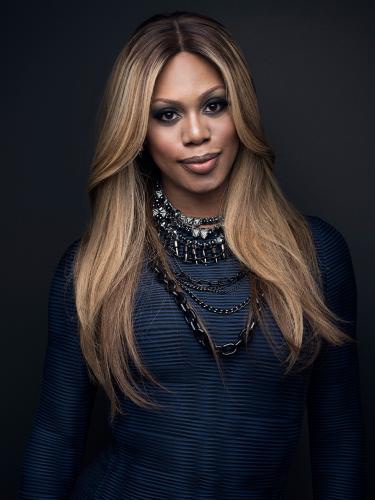
(Figure 4). Emmy-nominated actress Laverne Cox. 2017. Source: https://www.colorado.edu/today/2017/01/12/
Laverne Cox, a transgendered actress (fig. 4) highlights the use of gender props that are ‘in line’ with her gender identity, the use of feminine makeup, an excess of jewellery and fitted blouses to accentuate her figure, the use of long blonde hair. By this visual presentation Cox is gender conforming, similarly to Miller and Delevingne. The truth visually shared by Cox is one of similarity to a cis-gendered woman; however, we know, outside of the social contract formed through visual communication, that Cox is a Transgendered woman. For the heterosexual receiver this may have significant impact on their ability to sanction the information being shared by Cox. If the receiver doesn’t reach the understanding that you are gender conforming then you’re not, no matter how you communicate your gender, visually or linguistically (Papoulias 2006). The impact of this information, whether visually or linguistically shared, or even assumed, brings into question the integrity of the trans-gender congruency. Dissimilar to the realisation of homosexuality, transgenderism is viewed differently in heterocentric society. More so than homosexuality, the sender feels deceived, feeling forced into the queer perspective, albeit a perverted and crude representation of what they think the queer perspective to be. The social agreement is shattered, similar to the cisgendered plausibility produced by the trans individual. The sender feels lied to. While, from the queer perspective, such can be interpreted as transphobia, in the heterosexual matrix forming the base of a heterocentric society, this is the reality of misunderstanding. Truthfulness is measured by heterosexual congruency, due to this being a fragile construction, the trans identity has the ability to disguise in this matrix as plausibly cis until self-outing, resulting in the het receiver rarely sanctioning the social contract. These alternative gender expressions are forced into the category of Queerness through cis-gendered conforming when the Gender identity of the trans individual who doesn’t conform isn’t different to that of the trans individual who leans into gender conforming. We see the effect that the veridiction contract has on the pairing of an individual to a linguistic expression of gender, that enables a spacing between ‘normal’ and ‘other’.
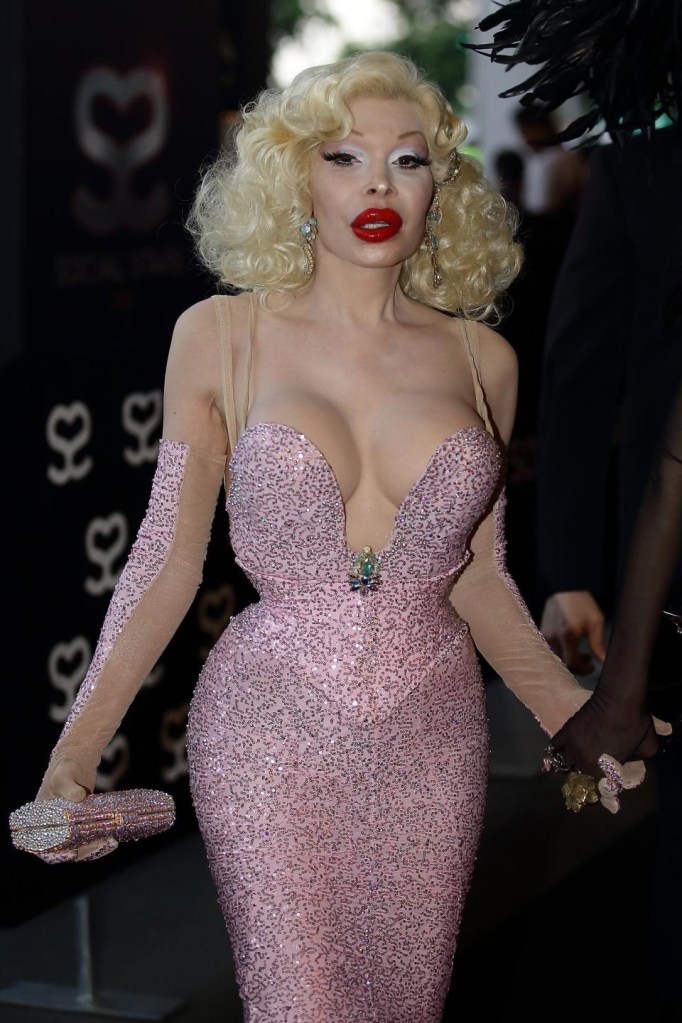
Trans, queer nightlife legend, Amanda Lepore (Fig. 5): a quintessential example of Gender Compliance, is an expression of a satire, caricature of womanhood, instigating the conversation in the queer community about what makes a woman, how is womanhood measured, and comments on the obscurity of gender as a social construct. More so it is important to understand that this expression is far from drag, though could be perceived as a drag performance via aestheticism. Her gender expression makes full use of feminine
props with intentions to communicate the obscurity of womanhood with view to queer nightlife and culture. Though Lepore has extensive knowledge and understanding of queer and gender theories, apparent in her visual communication and her verbal communications in interviews, this may be inaccessible to the het audience. Head-to-toe the look is hyper-feminine, from the pink dress to the red lipstick. The fact the dress is covered in glitter, the over stylisation of the outfit from the matching clutch bag, large earrings with matching rings, the corset used over the dress in matching fabric, heavy eye makeup and drawn eyebrows makes the dress surpass gender conformity. It is no longer plausibly just feminine: it’s now hyper-feminine. This hyper femininity is supported by Lepore’s physical attributes as well: the platinum blonde hair styled in an up-do, her extended eyelashes, her full lips, the cheek filler, her cartoonishly perfect breasts, the way she is holding herself with the slight pout. This presentation sends the receiver into overload, too stimulated by visual props that the receiver is used to not even consciously processing. The receiver is forced to manually digest the information and as such raises suspicion, perverting the intent behind the expression (Dyer 2002). This further support transphobic assumptions defining ‘real women/men’ by a need to conform to gender via a criterion that doesn’t allow space for alternatives to cis-genderisms, including a strict ‘amount’ of correct gender confirming props, ultimately allow the heterosexual matrix to define not only compliance but also deviance. Here Lepore’s gender expression matches her authentic gender identity and as such is a compliance to gender norms, albeit with intentions to subvert from cis-gendered binarism. The lack of subtlety of this intent, breaks the social contract. However, Lepore may not want to extend this understanding to all receivers, specifically straight receivers. Possibly this is an understanding she only wants to form with other queer individuals who have the ability to regurgitate her intent.
Contrariety to Gender conforming, Gender non-conforming is best described as an understanding and a disregard for ‘normative’ relations between gender identity and gender expression. We understand that masculinity is not exclusively owned by men and women do not own femininity, and even in normative gender identities we can see these mixes of expressive traits, showing gender as discursive and cultural construct. ‘Incorrect’ correlation will result in the questioning of sexuality, and assumptions that the individual is homosexual will be produced via the heterosexual matrix trying to produce conformity
through the sense of ‘otherness’.
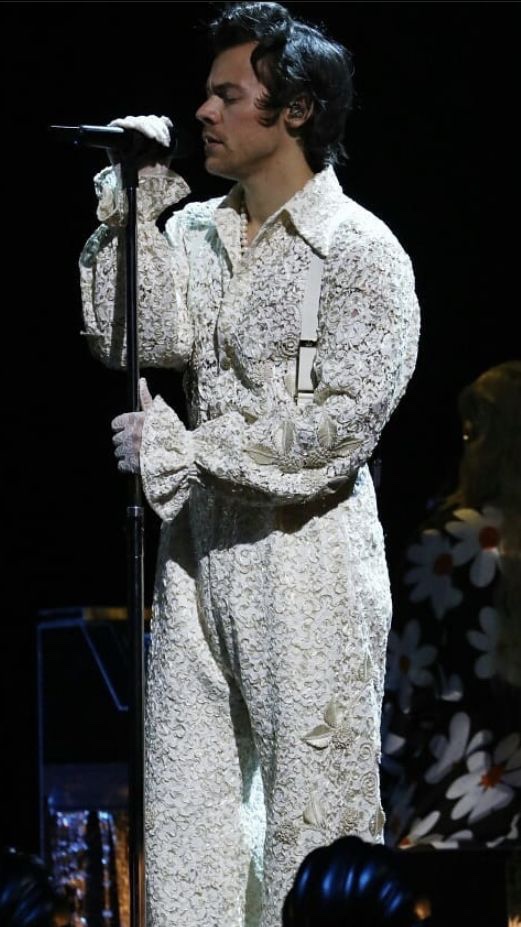
Harry Styles, a popular musician (Fig. 6), uses a dandy era aesthetic to build a brand for himself that is current while raises relevant questions about gender. The use of white lace, a typically feminine material, and specific styling choices such as the androgynous haircut, dainty lace gloves, puff sleeves, high waisted trousers, work to create the personae of femininity albeit on a body that self-identifies as a man. Styles can separate his gender identity from his gender expression and many heterosexual receivers allow this. Gender non-conforming allows for a bridge to be built via explanation from the ‘other’ to the heterosexual receiver, providing the heterosexual receiver is open to information that is not only visual, allowing a space for the ‘other’ to denounce ‘queer’ as individual expression, separate from homosexuality. The concept of a feminine man is becoming more common place within today’s society and as such the het receiver ‘allows’ for the sender to justify their expression, filling in blank information slots regarding intent in relation to sexuality. We see this with Styles through social media and interviews. The het receiver enters the social exchange apprehensive and inquisitive. This gender expression exposes the sender, queer or otherwise, to clumsy questions produced from a culture with little respect for the queer identity, that is masked behind a ‘simulated misunderstanding’, caused by a refusal to challenge power structures, which in turn allows heterosexual receivers to remain complacent in ignorance, furthermore containing and confining queer bodies to the norm, thus nullifying subversive intent. This social contract does not have to be sanctioned by either party. The sender may refuse to acknowledge questions produced by their gender expression, keeping gender identity and sexuality secret from the receiver. Alternatively, the receiver can choose to discredit or ignore the response the sender offers up, and as such produce a new produced truth. Furthermore, this could just become an endless cycle of debate. Gender Queer is a value in which there is no ability to negate expression as experimentation, instead is a value of authentic affiliation to homosexuality and queer culture (Sichler 2010:46). To illustrate, in contrast to Styles, see YUNGBLUD (Fig. 7), an openly queer musician from alternative sub-culture who expresses as gender queer in this image via the use of feminine gendered props such as red lipstick and eyeshadow, fishnet gloves and uni-sex briefs, paired with a fitted black latex blouse shirt.
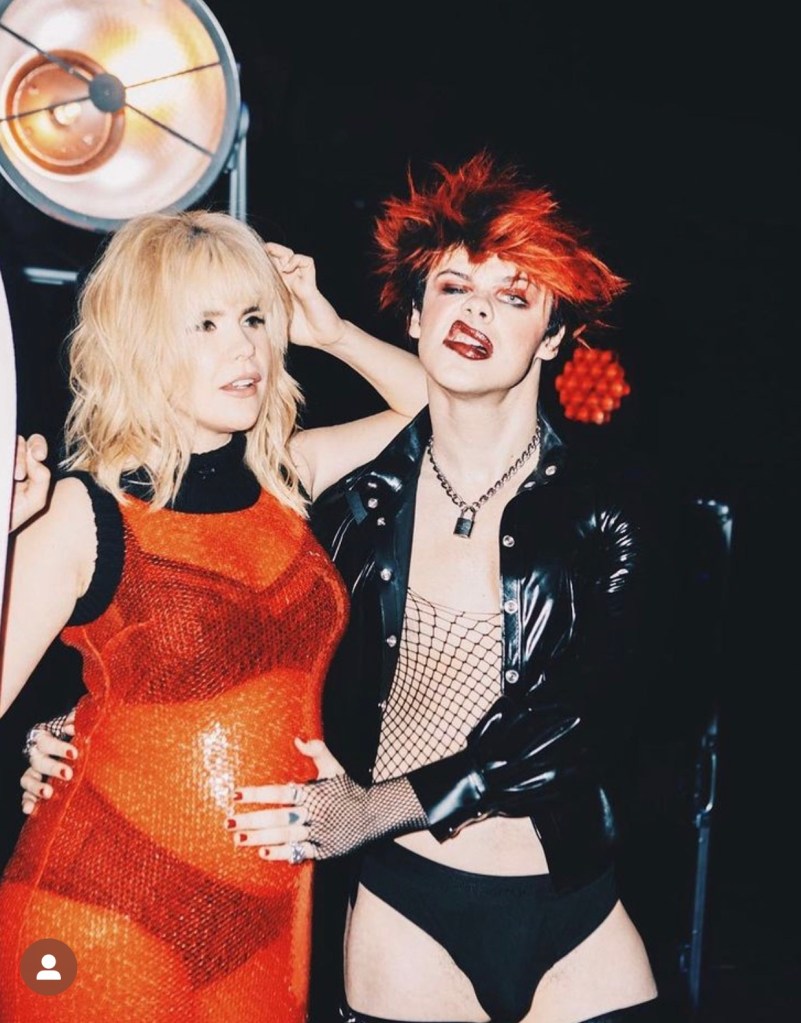
(Figure 7). YUNGBLUD and Paloma Faith at the Attitude Magazine Awards. 2020. Source: https://www.instagram.com/p/CIQaukDA863/
Queer usage of gendered props opens the value of gender queer to a spectrum of different expressions that stray from absolutely feminine/masculine and start to produce different gender expressions (Jagose 1996), a sense of realism is added into gender expressions that make use of masculinity and femininity to create a queer body. The interaction that ensues is completely different to that of a mainstream appropriation of feminine-masculinity or masculine-femininity. The affiliation with homosexual culture is clear and as such the contract breaks down before discussion, visual or verbal, can happen. The receiver decides at first interpretation, assuming they understand this value and its connection with the queer. As such the sender spaces themselves, justifying this decision by linking this expression with a sense of chaos or danger, due to how it assaults a construct they are comfortable in. The sender is aware of the resignification of these props, with intent to pervert the binary that will simplify their expression to something digestible. The denial from both parties of the contract to want to reason with each other creates a void in actual meaning, which results in a dysfunctional agreement that the expression has affiliation with the queer, an agreement to disagree, a decided truth.
Heterosexual privilege allows the receiver to somewhat dismiss alternative gender expression as irrelevant via queerness. The other way the heterosexual receiver can respond to alternate gender presentation is by perverting this communication. Suspicious gender is a value at which the heterosexual receiver perceives the gender presentation as a lie.
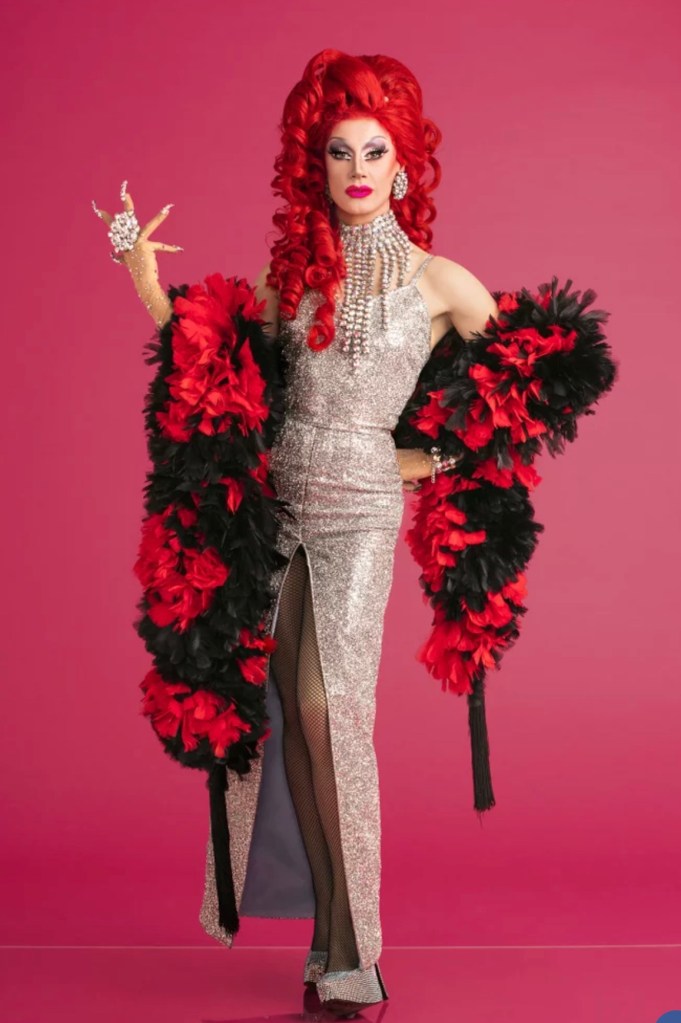
Divina De Campo, a British drag queen (Fig. 8), has been chosen to highlight a campier side to western drag which differs from a more fashion-forward style of drag that has been
produced because of the surfacing of drag subculture into mainstream via the reality show RuPaul’s Drag Race. The size and styling of the wig and the faux grandness of the costume jewellery alludes to the camp stylisation, reinforced using a cheap silver glitter dress with a dramatic front slit and an over-the-top burlesque styled boa. This type of drag is sure of its camp intentions in not trying to become the image of womanhood but surpassing that as a form of parody (Rose 1993:55), for the sake of queer entertainment. How can this process be subversive to a binary structure when it entirely relies on parodying the same binary for entertainment? Simply it cannot, due to the structure of the binary as discussed. Drag and suspicious gender expression diverts from gender expectations and norms and is allowed to do so due to the queer audience’s ability to have conversation about gender (Sichler 2010). Heterosexual receivers will pervert suspicious gender to reinforce gender binarism, whether it’s through labelling these gender expressions as abnormal or by appropriation of cross dressing. We see this in Heterosexual media as in films like Mrs Doubtfire (1993) “(camp) used definitely by Queers against straightness, but it is easily taken up by straight society and used against us” (Dyer 2002:51). The image of ‘a man in a wig and a dress’ is the same for a heterosexual audience and a queer audience; however, the discourse around it is completely different and thus the value can be perverted and removed from its connection with the queer experience and queer audience, (Dyer 2002;60). The value of Drag, particularly camp drag, only holds the meaning it does due to the queer audience ability to negate gender as a form of entertainment. The discrediting of drag as misogynistic parody is developed by the Het receivers misunderstanding and perversion of a gender value they acknowledge as a lie. The assumption of deceit doesn’t allow the heterosexual receiver to partake in the practice and subculture of not only drag but ‘suspicious gender’ that some queer individuals revel in. Similarly, to how other gender expressions are reframed to fit within and ultimately reinforce the gender binary, these suspicious expressions will be distorted and recoded to fit a straight narrative. Though this is the intent of the queer sender, to provide new meaning to heterosexual signs, the expression is unable to do so due to the unequal power dynamics. This analysis of gender negates its fluidity and the possibility for individuals to have a complex relationship with a range of values (Jagose 1996), however is Representative of how the straight audience has the ability to dictate the capacity of subversion in queer entertainment.

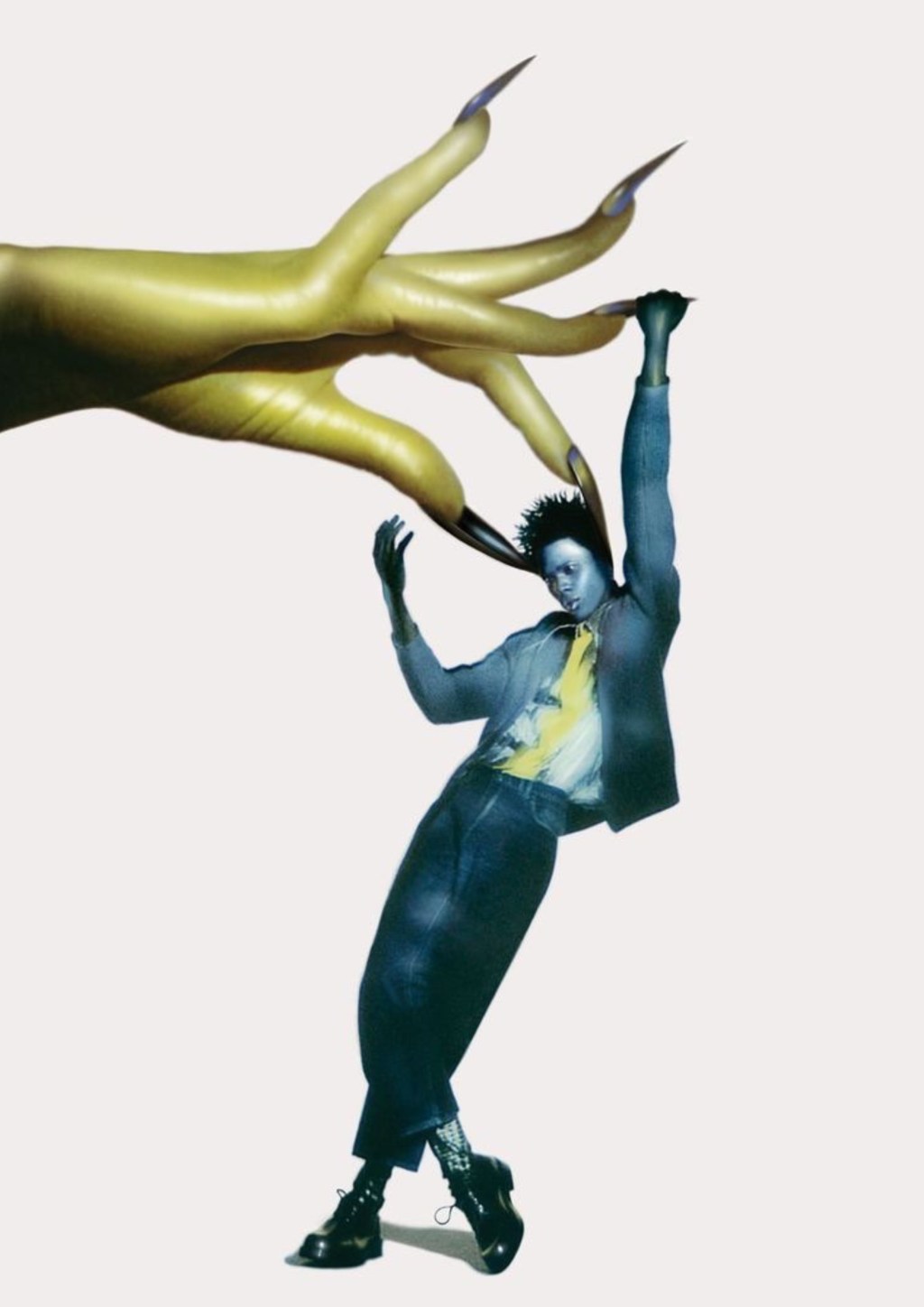
Due to the heterosexual perversion of these communications via heterosexual privilege and appropriation, these forms of queer expression can often result in the refortification of the current binarism (Butler 1993). This exact mechanism is what makes it so hard for any form of gender expression to uproot the gender binary. The subversive capacities are stunted by the Het receiver via appropriation. Salvia (Fig. 9) exhibits what is described as Surreal Drag, which is so successful in subverting the power of the gender binary due to the way they build otherworldly, almost alien body. The hair line and styling choices are so abnormal that they become signifiers of this possibility of an otherness that doesn’t rely on the binary but feels as though it is part of a set of rules that the heterosexual viewer is not privy too, somewhat ignoring the fact “Gender has become a verb, a state of being one inhabits” (Sichler 2010:52). Editing the image to create otherworldly characteristics such as the additional teeth starts to space the character away from ‘human’ traits. The viewer can perceive this image as less a gender expression and more of a costume or art, removing the image of Salvia from the being of Salvia. This then perverts the otherwise subversive queer gender presentation into something that is palatable for the heterosexual audience, causing the straight receiver to completely deny that Salvia’s being is congruent with their current appearance. In many ways this a truer signification of non-binary, as it is devoid of the use of gendered props, becoming neither instead of both. As the receiver can’t reframe this into the straight narrative, reworking it back into the binary, they nullify the queer individual’s identity and expression as false, as art or as make believe. This leaves the het receiver at ease, allowing them to feel that they have removed the weight of the claim against the binary. However as queer individuals with the ability to negate around the binary and the possibility of otherness, we can share in the true intent of subversion of not only the gender binary but in the expansion of being through appearance that the sender is trying to communicate
3. Conclusion
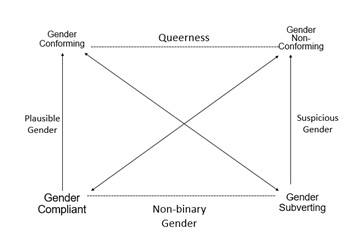
Taking into consideration the discussion we have had above, we can start to see how different gender identities, fortified by gender expressions, start to form complex relationships with each other to form separate values produced as the result of formed agreements between the straight receiver and the queer sender. Gender as a complex discursive construct has been discussed on a visual level to help form semantic values in terms of identities. Gender conforming, as viewed in the case of Miller and Delevingne, is a value of prescribed normative gender, masculine men, and feminine women. Which is in contrary to the value assigned to Styles, Gender non-conforming, feminine men and masculine woman. Queerness is a state of being that impacts these values, affecting whether the heterosexual receiver will accept the gender presentation as normative via concurrency of sexuality with gender identity. Queerness opens a given reality of spectrum between these two values, accessible to varying degrees dependent of social exchanges between sender and receiver, illustrated through the analysis of YUNGBLUD. Contradicting to gender non-conforming is gender compliance, suggesting identities with intent to operate within the binary however do not fit the strict criterion of gender conforming. In this instance, the discussion was based around Lepore, however this value encompasses a range of concurrent gender identities that fall out of the realm of plausible. Plausible gender sits in the position of a positive deixis to gender conforming, as a value that is only dissimilar to gender conforming due to the Heterosexual fixation to normative cisgenderism. As such in the example of Cox, blocked from Gender conforming recognition due to the het receiver’s inability to sanction the told truth of the individual. This social contract is different to that of suspicious gender identities such as Drag, which in essence act not as compliance to the binary but as parody or as commentating of given social constructions via queer entertainment/expression. The value, highlighted through De Campo, is complex in a difference sense. There isn’t an attempt to conform like in plausible gender expressions, there is a sure intent to be other. Like that of the expression of Gender subverting. Subverting takes this value from a form of parody to a denial of the binary. Though this is Re-signified into an expression separate to identity through het appropriation of queer identity, this is the closest form of not conforming to the gender binary in absolution. It negates the use of gendered props completely to create space apart from the binary. As soon as gendered props are reintroduced and adorned by the queer sender, the value of the identity falls back into ‘non-binary gender’.
As discussed at the beginning of this analysis, though individuals such as Van Ness have helped to bring the term non-binary into the world of popular linguistic, it is not a perfect match to its semantic value. It is far more complex as a collaboration of masculine and feminine gender props, the intent to subvert gender but also the inability to act outside of the binary. It’s queer in its sense of otherness, although it does not access the denial of gender binarism despite its intent to do so. Why is it different to the value of ‘queerness’ we have outlined? Queerness operates within the binary intentionally, this is shared with the het receiver, producing three spectra between masculine and feminine, man and woman, and male and female, that the receiver will align the sender on. This may not match where the sender places themselves, but such is the nature of appearance compared to being. Non-binarism should have the intent to operate outside the binary, to not realign upon a spectrum between two options but reach a level of otherness that the het audience is not prior too. As shown via visual analysis, today’s linguistic definition of the identity of non-binary does not match the potential that such a complex concept should possess and as such senders may self-identify linguistically as non-binary, however, place closer to queerness or gender non-conforming. Of course, this in part is due to the self-affirming nature of heterocentric society channelled through the straight receiver, but also in part caused by the queer sender’s inability to access true non-binary gender through lack of awareness of use of gender props and limitations of social contracts acting against them.
There is much context that has been ignored throughout this article such as the impact of racism on the viewing of gender identities of black queer people, the effect of ‘rainbow washing’ on the perception of non-conforming gender identities, the intersex body, and their place in the queer community, and so forth. This conversation about the queer gender identity, it’s place in the world and the possibility of subverting gender is one that is not only happening theoretically, moreover is evolving at a similar rate to the world around it. As in all aspects of queer theory, these terms may become outdated as better forms of identification are born from a more self-aware queer community.
Bibliography:
Butler, J 1990. Gender trouble. Oxon: Routledge.
Butler, J 1993. Bodies That Matter. New York: Routledge.
Dyer, R 2002. The Culture of Queers. London: Routledge
Greimas, A.J.; Courtés, J 1982. Semiotics and Language. An analytical Dictionary. Bloomington: Indiana University Press.
Greimas, A,J 1989. New Literary History Vol.20 No.3 Greimassian semiotics. Baltimore: The John Hopkins University Press.
Hooks, B 2006. Outlaw Culture. London: Routledge.
Jagose, A 1996. Queer Theory in the Australian Humanities Review. Retrieved from: http://australianhumanitiesreview.org/1996/12/01/queer-theory/ 29/12/2020.
Papoulias, C 2006. Transgender’ in Problematizing Global Knowledge: 231-233. Retrieved from: https://journals.sagepub.com/doi/pdf/10.1177/026327640602300250, 29/12/2020.
Rose, M.A 1993. Parody: Ancient, Modern, and Post-Modern, Cambridge: the University of Cambridge.
Sichler, K 2010. Post Queerness: Hyperreal Gender and the End of the Quest for Originsin Post Identity Janani Subramanian, editor, Spectator 30:2 (Fall 2010): 46-56. Retrieved from: https://cinema.usc.edu/archivedassets/101/16193.pdf, 05/01/2021.
Sontag, S 1994. Against Interpretation. Reading: Cox & Wyman Limited.
Tulio Baggio, A 2019. Proposition d’un modèle sémiotique pour les études de genre, Paris: Universidade Tecnológica Federal do Paraná.
 resign
Leave a comment